A large electricity consumer in Nashik cannot treat the word “hybrid” as proof of subsidy eligibility. By separating residential rooftop assistance from commercial, industrial, captive and open-access routes, you can test a subsidy claim against the correct scheme, documents, approvals and project economics before committing capital.
Key takeaways
- Confirm the notified programme before relying on any hybrid system subsidy.
- Check ownership, site location, tariff category and metering arrangement in Nashik.
- Keep land, approvals, invoices, commissioning records and equipment certificates together.
- Compare subsidised hybrid costs with grid power, solar-only and wind-only alternatives.
Which subsidy scheme, if any, covers a large power user?
Confirm the beneficiary and equipment against a notified programme before discussing rates. For most large users, a solar wind hybrid system subsidy is not created by the word “hybrid” or by installing a battery.
| Programme or benefit | What it covers | Large-user position |
|---|---|---|
| PM Surya Ghar: Muft Bijli Yojana | Eligible residential grid-connected rooftop consumers; ₹30,000 per kW for the first 2 kW, ₹18,000 for the third kW, capped at ₹78,000 | These rates do not apply to industrial, commercial or other non-residential users |
| MNRE National Wind-Solar Hybrid Policy | A framework for developing hybrid projects | It does not automatically provide capital assistance |
| State support or MEDA programme | Assistance defined by a current Maharashtra notification | Check the consumer category, component and capacity ceiling |
| PM-KUSUM | Specified agricultural solar routes | It is not a general large-user hybrid subsidy |
| Electricity-duty concession, accelerated depreciation, input-tax treatment, RECs or generation-based incentive | Separate tax, accounting or market mechanisms | None is automatically a capital subsidy |
Claims for solar power subsidies for solar wind hybrid system projects require solar power subsidy eligibility under the named scheme. Every claim must identify the ministry, scheme, implementing agency, consumer category, eligible component, capacity limit, notification number and application deadline.
A battery, imported module, wind turbine or hybrid label does not establish eligibility. Check whether the programme covers the solar array, turbine, inverter, battery, balance of system or complete plant; PM Surya Ghar equipment must also satisfy applicable Domestic Content Requirement and the MNRE-approved module list.
How do ownership, location and metering change eligibility in Nashik?
A rooftop, behind-the-meter plant serves the premises through its existing connection; a ground-mounted plant may serve the same site or export elsewhere. Ownership also changes the route: the consumer may own it, use captive or group-captive generation, buy third-party power, or sign a power-purchase agreement.
These distinctions affect solar power subsidy eligibility more than the hybrid plant’s installed capacity.
- Confirm the consumer category: industrial, commercial, institutional, agricultural, municipal, residential or government.
- Check sanctioned load, contract demand, connection voltage and available evacuation capacity.
- For off-site procurement, confirm whether the arrangement qualifies as captive, group-captive, third-party supply or green open access.
Green Energy Open Access generally uses a 100 kW sanctioned-load or contracted-demand threshold. Captive consumers receive separate treatment under the Green Energy Open Access Rules, so do not apply the ordinary threshold mechanically. Open access reduces or restructures power costs; it is not a capital subsidy.
| Arrangement | What happens | Key eligibility issue |
|---|---|---|
| Net metering | Imports and exports are settled against each other | Check Maharashtra limits, consumer category and sanctioned load |
| Gross metering | All generation is exported and paid under the approved rate | Requires an approved export agreement and meter arrangement |
| Open access or other approved export | Power moves through the network to an eligible consumer | Check permissions, scheduling and settlement rules |
For claims about solar power subsidies in nashik or a hybrid solar system subsidy, verify the MSEDCL connection rules, Maharashtra Electricity Regulatory Commission orders, MEDA notifications and the current national or state portal. Check wheeling, transmission, cross-subsidy and additional surcharges, banking, forecasting, scheduling and deviation settlement; Nashik has no automatic city-level subsidy.
What evidence and equipment checks must pass before approval?
Before filing, assemble evidence that proves the applicant, site, load and proposed equipment fit the notified programme. This record establishes solar power subsidy eligibility and prevents a quotation from disguising avoided electricity cost as capital assistance.
1. Submit the latest electricity bill; sanctioned-load or contract-demand record; GST registration; certificate of incorporation; land title or registered lease; single-line diagram; detailed project report; vendor quotation; bank details; and proposed ownership agreement. The project report must identify consumer category, capacity, ownership structure, interconnection point and each component.
2. Obtain written administrative approval before ordering or installing anything when the scheme requires pre-sanction. Equipment purchased or installed first can make the claim ineligible. Keep the commissioning certificate, meter-testing report, inspection record and interconnection approval for the later claim stage.
3. Verify every component separately: solar modules on the MNRE-approved module list and compliant with the Domestic Content Requirement where applicable; inverter and protection equipment against applicable BIS, IEC, CEA and grid-code requirements; wind-turbine type certification under the Indian Wind Turbine Certification Scheme; and approved-vendor registration.
Secure separate technical approvals for solar, wind, battery and conversion equipment. A solar wind hybrid system subsidy does not automatically cover the complete plant.
4. Ask the implementing agency in writing whether eligible cost includes modules, turbine, inverter, battery, balance of system, civil works, evacuation, GST and installation. Ask whether the amount uses a benchmark cost or the actual quoted cost.
Do not rely on a vendor’s “subsidy” label without the scheme notification and approval reference.
When is a subsidised hybrid plant financially better than the alternatives?
A subsidy claim is financially credible only after you prove what the plant will produce and what the site can absorb. Require:
- Twelve months of hourly load data showing peak demand, daytime and night-time consumption, outage history, battery duration, cycling value, renewable-energy share and curtailment risk.
- Seasonal solar irradiation, measured wind speed at hub height, the turbine power curve and turbulence data.
- Setbacks, access roads, available roof or land, the grid-interconnection point and evacuation requirements.
Compare net project cost, not the quoted subsidy, against each alternative:
| Option | Financial test | Main burden |
|---|---|---|
| Plain solar or rooftop-only generation | Daytime load and roof yield | Export limits and metering |
| Wind plant | Hub-height wind and land access | Setbacks, turbulence and evacuation |
| Battery-backed solar | Battery duration and cycling value | Replacement and operating cost |
| Captive solar | Captive-use savings and demand profile | Ownership and compliance |
| Solar-wind power-purchase agreement | Contracted tariff and delivery risk | Contract and scheduling |
| Open-access purchase | Wheeling, transmission, cross-subsidy, additional surcharge, banking and settlement | Approvals and recurring compliance |
Include financing, depreciation, input-tax credit, renewable-energy certificates, evacuation works, forecasting and recurring compliance. A hybrid solar system subsidy loses its advantage where wind is weak, night demand is low, land or evacuation is inadequate, ownership is short, battery utilisation is limited, or the project exceeds a consumer-subsidy ceiling.
Nature Tek Solar Pvt Ltd can support feasibility and claim evidence, but assign utility approvals, follow-up and rejected applications in writing.
Related products
 | Services The Solar-Wind Hybrid System integrates both solar photovoltaic panels and wind turbines to provide a continuous and balanced renewable energy... View product → |
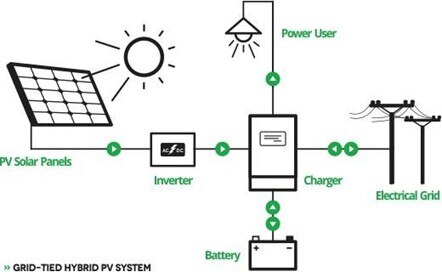 | Products A Hybrid Solar System combines the best of both on-grid and off-grid setups by integrating solar energy, battery backup, and grid power into one... View product → |
What approval sequence and contract checklist protects the claim?
Treat a claim for solar power subsidies for a solar wind hybrid system as unverified until the agency and current notification appear in writing. This applies to solar power subsidies in Nashik and any advertised hybrid solar system subsidy.
- Confirm the scheme, consumer category, capacity ceiling, eligible components and deadline.
- Register the beneficiary and project on the official portal.
- Obtain technical feasibility for load, land, grid connection and export capacity.
- Submit the utility application with the single-line diagram and load records.
- Complete vendor approval before procurement or installation.
- Pass the site inspection.
- Install the approved solar, wind, battery and protection equipment.
- Complete meter testing, commissioning and the commissioning certificate.
- Secure net-metering or open-access approval, then claim subsidy after verification and release.
Subsidy is not normally an advance payment. The written scheme must name the inspection stage, commissioning deadline, release authority and payment account.
Common rejection triggers include:
- Wrong consumer category or missing pre-approval
- Capacity above the scheme limit or non-approved equipment
- Incomplete land or load records
- Invoice and beneficiary names that do not match
- An unapproved export arrangement
- Work started before approval
Before signing, request the official guideline, notification date, eligible-cost formula, component-wise subsidy, capacity ceiling, document owner, application reference, inspection responsibility, commissioning deadline, payment trigger and refund or rejection clause. Put separate prices for solar, wind, battery, civil works, evacuation, taxes, open-access charges and operations and maintenance in the EPC contract.
Frequently asked questions
Which subsidy scheme covers a large power user?
No subsidy applies solely because a project is labelled hybrid. Confirm that a notified central or Maharashtra programme names your beneficiary category, technology and capacity before using a subsidy rate.
How do ownership, location and metering affect eligibility in Nashik?
Eligibility depends on who owns the plant, where it is installed, the consumer or tariff category, and whether generation uses net metering, gross metering, open access or captive consumption.
What evidence and equipment checks are needed before approval?
Prepare ownership and land records, electricity bills, approvals, invoices, commissioning evidence, serial numbers and test certificates. Match the installed modules, inverters, turbines, batteries and protection systems to the programme rules.
When is a subsidised hybrid plant financially better than alternatives?
Compare the post-subsidy capital cost, battery replacement, maintenance, financing, grid charges, export limits and expected solar and wind output against solar-only, wind-only and grid-power options.
What approval sequence and contract terms protect the claim?
Obtain programme confirmation before procurement, complete utility and local approvals, document installation and inspection, and specify eligibility responsibility, payment milestones, documentation, testing, warranty and clawback risk in the contract.
Related products
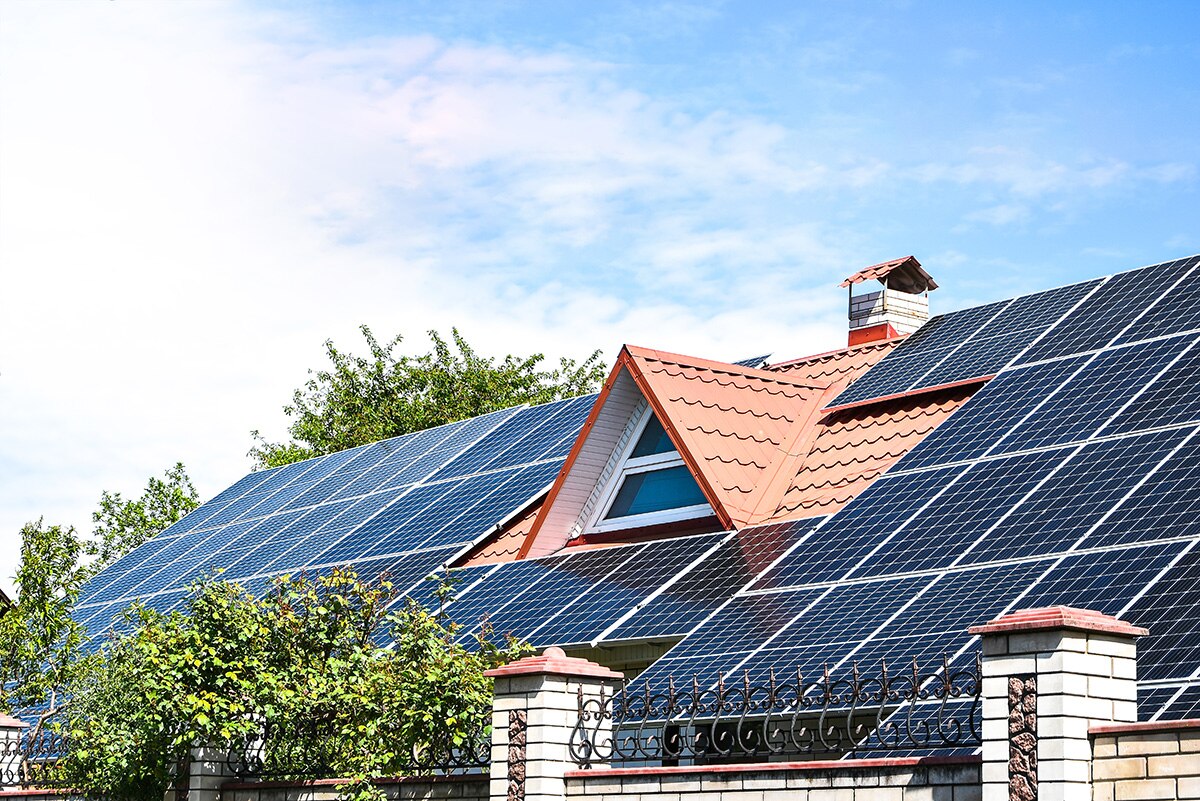 | Solar Plant End-to-End Development We provide customized plant development, managing everything from site assessment to final execution. View product → |
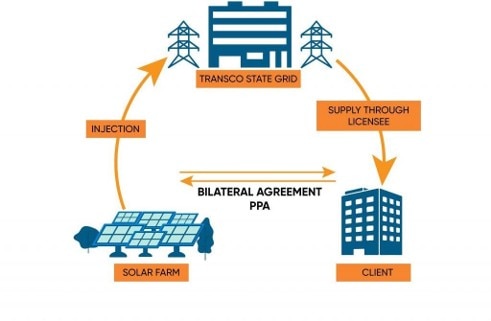 | Services allows large power consumers to buy solar electricity directly from a solar park or third-party generator, bypassing the traditional utility. View product → |
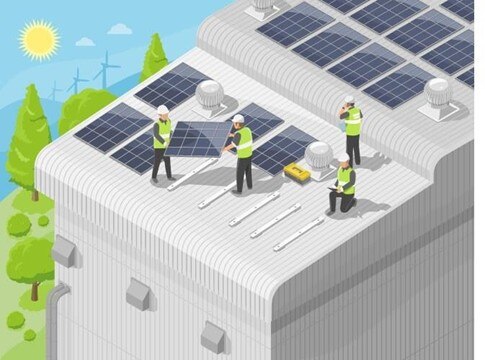 | Services Our Solar Rooftop Systems are tailored for residential, commercial, and industrial buildings. View product → |
 | Services A Solar Park is a centralized solar power generation project where multiple users can invest or purchase power. View product → |
Keywords