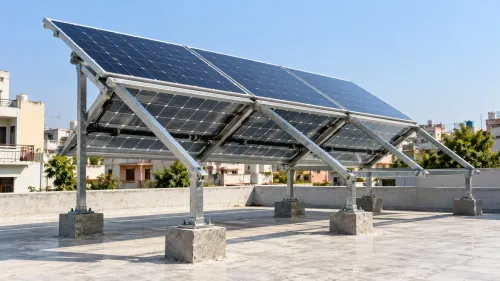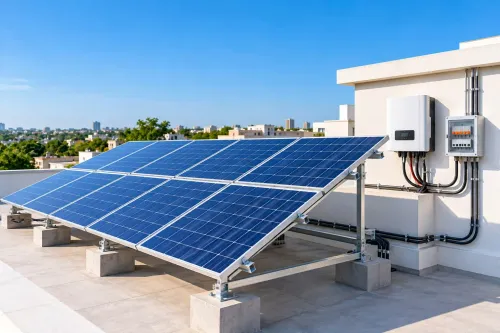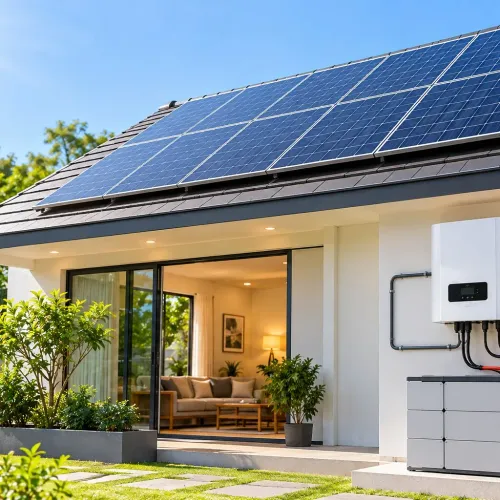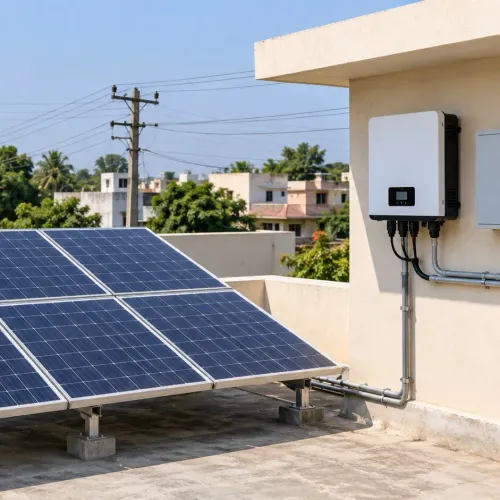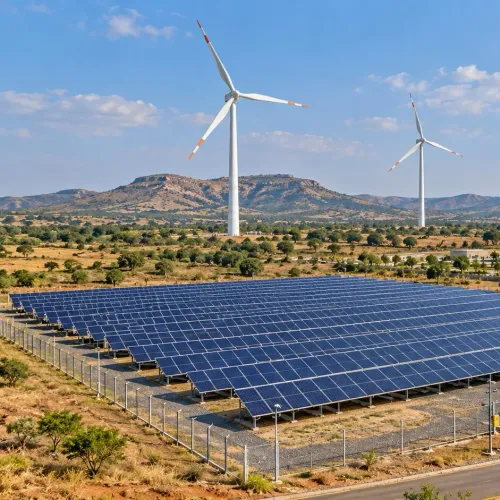
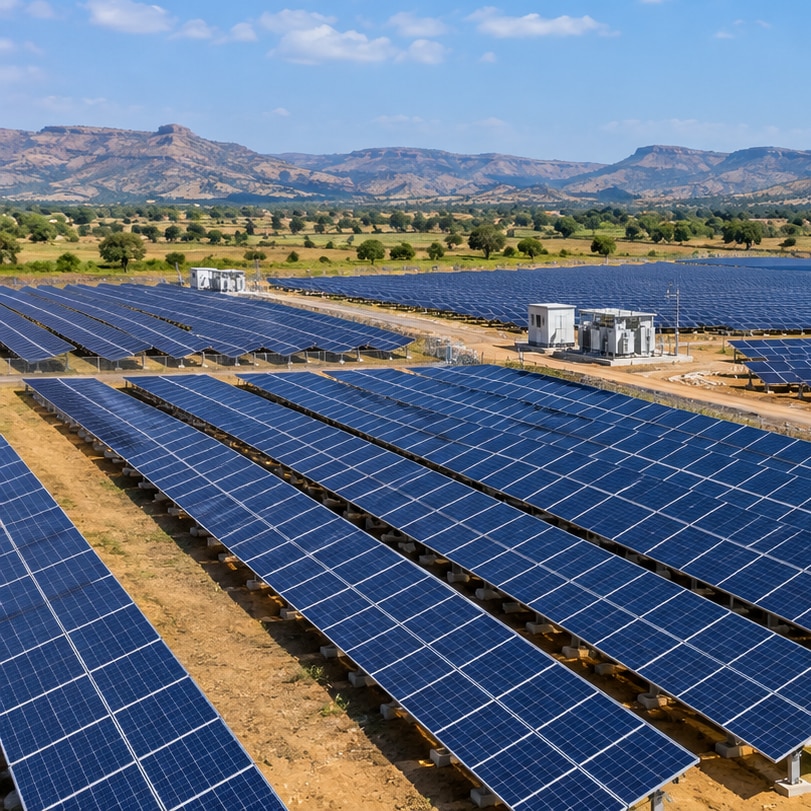
A large ground-mounted solar plant in Nashik does not receive a capital subsidy simply because it is located in Maharashtra. The right comparison is between household rooftop assistance, commercial self-consumption, tender-based procurement, captive generation and open-access sale, with each route carrying different eligibility rules, charges and revenue risks.
Key takeaways
- Nashik location alone does not create an automatic capital subsidy.
- Check the notified scheme, owner category, project size, and sale model.
- Budget for land, approvals, evacuation, financing, and uncovered equipment costs.
- Compare direct ownership, captive use, open access, and competitive procurement routes.
Does a large solar plant in Nashik qualify for a capital subsidy?
No—not merely because the site is in Nashik. A private large plant has no automatic Nashik-specific capital grant; it must qualify under a notified central scheme, Maharashtra programme, or competitive procurement route. That is why a search for “solar panel subsidy for solar plant in nashik” or “solar plant subsidy in nashik” needs scheme-level verification.
1. Identify the project category before assuming support.
- PM Surya Ghar: Muft Bijli Yojana is for individual household residential rooftops. Central assistance is capped at 3 kW: 60% of benchmark cost for the first 2 kW and 40% for the next 1 kW.
- Commercial and industrial rooftops may use approved grid arrangements such as net metering, gross metering, or open access, where available. Those arrangements are not household capital subsidies.
- A factory, shop, office, or warehouse cannot claim household CFA for a ground-mounted array.
2. Test whether a procurement programme applies. PM-KUSUM Component A generally covers 500 kW to 2 MW decentralised plants selected through a state-specific procurement process. It normally involves DISCOM power procurement from eligible developers or landowners, not an automatic upfront grant.
3. Separate tender revenue from subsidy. Utility-scale tender programmes can provide a selected tariff or signed power-purchase agreement, while solar-park participation can provide development infrastructure; neither automatically pays a capital subsidy.
Before ordering equipment, verify the current notification with MNRE, Maharashtra Energy Development Agency (MEDA), MSEDCL where relevant, and the relevant tendering agency. Confirm eligibility, bid selection, PPA, commissioning deadline, and whether any assistance is paid as CFA, tariff support, or not at all.
How do incentives differ by project owner and sale model?
A private plant may have no capital subsidy yet deliver the best return by replacing expensive daytime electricity. The value depends on who owns the asset, who buys the power and which charges apply.
| Owner and sale model | Main value source | Incentive and risk |
|---|---|---|
| Private commercial or industrial captive | Avoided daytime electricity purchases | Verify the applicable captive-consumption percentage, ownership structure and group-captive rules. Savings depend on demand charges, time-of-day use and export limits. |
| Third-party open-access project | Power-purchase agreement | Model transmission charges, wheeling charges, cross-subsidy surcharge, additional surcharge and banking. These costs can reduce the buyer’s saving and the seller’s margin. |
| Utility-scale developer selling to a DISCOM | Tariff discovered through bidding | Revenue comes from the awarded tariff and signed PPA, not an automatic grant. Check bid security, commissioning deadlines and payment terms. |
| Government project | Avoided purchases or a public procurement PPA | Budget approval and tender conditions drive value. Government ownership does not itself create a capital subsidy. |
| Solar-park participant | Tariff discovered through bidding or a PPA | Park infrastructure can simplify land, evacuation and approvals, but development charges and allocated capacity remain project costs. |
| Agricultural or landowner-led project | PM-KUSUM procurement or land-linked development revenue | Component A follows DISCOM procurement, usually for 500 kW to 2 MW projects. A landowner may instead earn lease or development revenue without owning the plant. |
Therefore, a “large solar project subsidy in Maharashtra” comparison must separate cash support from sale revenue. A PPA or tender tariff supports revenue; it is not the same as a capital subsidy. That distinction matters when assessing solar power subsidies for businesses.
Which size, connection and site conditions determine eligibility?
Eligibility turns on the project’s physical and commercial configuration, not the label “solar plant subsidy in Nashik.” A rooftop rule does not automatically cover a ground-mounted array behind a factory, and net metering is billing treatment, not equipment funding.
| Route | Size and site | Procurement path |
|---|---|---|
| Rooftop | Consumer-category limits apply; panels sit on the building | Check approved vendor, meter and current MSEDCL procedure |
| PM-KUSUM Component A | Generally 500 kW–2 MW, decentralised and grid-connected | State-specific selection, DISCOM procurement and usually a PPA |
| Solar park | Often multi-megawatt, ground-mounted | Park allotment, evacuation approval and tender or selected-bid conditions |
Use this checklist before ordering equipment:
- Record capacity in kW or MW, rooftop versus ground-mounted design, consumer category and ownership model.
- Match capacity with sanctioned load or contract demand and the proposed grid-connection voltage.
- For land, verify title or lease, conversion and land-use permissions, access, and the evacuation capacity available at the substation.
- Confirm the commissioning deadline and whether tender selection, a selected bid or a signed PPA is required.
- Ask whether an approved vendor, particular meter, inspection record or specified commissioning date is mandatory.
- Check current requirements with MNRE, MEDA, MERC and MSEDCL, plus the named tendering agency.
A 500 kW–2 MW PM-KUSUM Component A project follows a different procurement pathway from a multi-megawatt solar park. Rules for net metering, banking and capacity limits change; an old web page is not evidence. Verify the current order, procedure and written eligibility before relying on any large solar project subsidy in Maharashtra.
What does a subsidy pay for, and what remains your cost?
A notified benchmark cost is not your EPC budget. Rooftop CFA is calculated against the scheme’s benchmark cost, not automatically against the contractor’s quotation. If the quotation exceeds that benchmark, you pay the difference; therefore, solar power subsidies for businesses cannot be inferred from a headline percentage.
| Option | What you receive | What it does not mean |
|---|---|---|
| Cash grant or CFA | Payment calculated under notified scheme rules | Reimbursement of every EPC quotation or project cost |
| Accelerated depreciation | Historically used 40% depreciation rate for solar-generating equipment | Cash paid back by the government |
| Tender or PPA support | Contracted tariff or power-sale revenue | Capital subsidy for construction |
The historical 40% depreciation rate depends on the assessment-year law, taxable income, ownership and actual-use conditions. A solar panel subsidy for a solar plant in Nashik must be verified separately; depreciation is tax treatment, not guaranteed reimbursement.
For a large ground-mounted project, ask the scheme or procurement authority in writing which costs are excluded. Your budget may still need to fund:
- Land purchase or lease, fencing and grading
- Foundations, mounting structures, modules and inverters
- Transformers, internal cabling and the pooling substation
- Evacuation line, transmission upgrades and approvals
- Insurance, security, battery storage and interest during construction
- Operations and maintenance
Before claiming support, ask whether central and Maharashtra benefits can be combined for the same asset or capacity block. Do not assume a grant and tax benefit can both be claimed; obtain the authority’s no-double-claim position in writing.
How should you choose the lowest-risk route for a Nashik project?
Choose the route with the strongest project cash flow, not the highest headline subsidy. Model delivered electricity cost after demand charges, time-of-day consumption, export settlement, taxes, banking losses, wheeling charges and surcharges.
| Route | Financial case | Main value and risk |
|---|---|---|
| Residential rooftop CFA | Household owner only | Central assistance; ineligible for a business connection |
| Commercial rooftop or behind-the-meter | Factory, shop or office | Bill savings without household CFA; export limits affect returns |
| PM-KUSUM or other tender | Selected project with PPA | Tariff revenue depends on bid, PPA and commissioning conditions |
| Unsubsidised captive, group-captive or open access | Business or third-party sale | No capital grant; model wheeling, banking, cross-subsidy and additional surcharges |
Use the same assumptions for generation, degradation, financing, taxes, maintenance and payment delays in all four cases. This prevents a solar plant subsidy in Nashik, or a large solar project subsidy in Maharashtra, from looking attractive only because other costs were omitted.
Before ordering equipment, obtain a written checklist from MNRE, MEDA, MERC, MSEDCL and the relevant tender agency. Confirm the owner category, meter arrangement, connection voltage, sanctioned load, export settlement, PPA, commissioning deadline, selected vendor requirements and whether benefits can be combined.
Do not treat old web pages as proof of current solar power subsidies for businesses.
Professional EPC support becomes useful when approvals, evacuation design, metering and commissioning create more risk than panel selection. Nature Tek Solar Pvt Ltd can help coordinate those interfaces, but documented eligibility and the cash-flow model—not a quoted solar panel subsidy for solar plant in Nashik—should decide the route.
Related products
 | Services A Solar Park is a centralized solar power generation project where multiple users can invest or purchase power. View product → |
 | Services Our Solar Rooftop Systems are tailored for residential, commercial, and industrial buildings. View product → |
Frequently asked questions
Does a large solar plant in Nashik automatically qualify for a capital subsidy?
No. A private plant needs eligibility under a notified central scheme, Maharashtra programme, or competitive procurement route; Nashik location alone is not enough.
Which factors determine eligibility for a large solar project subsidy in Maharashtra?
Check the project owner, plant size, grid-connection arrangement, electricity sale model, site conditions, and the exact scheme notification.
What costs can a solar subsidy cover?
Coverage depends on the notified scheme. Confirm whether it pays toward eligible generation equipment and identify costs that remain yours, including land, approvals, evacuation, financing, and excluded works.
How can you choose the lowest-risk subsidy route for a Nashik project?
Compare the owner category, sale model, connection requirements, documentation, payment timing, and uncovered costs before selecting direct ownership, captive use, open access, or procurement.
Related products
 | Solar Panels Solar Panel 335 Watt DCR Poly Crystalline The 335 Watt DCR Polycrystalline Solar Panel is a high-efficiency solar module designed for residential, commercial, and government solar... View product → |
 | Solar Panels Solar Panel 540 Watt Mono PERC The 540 Watt Mono PERC Solar Panel is a high-efficiency solar module designed for residential, commercial, and industrial rooftop solar systems. View product → |
 | Solar Panels Solar Panel 335 Watt Poly Crystalline The 335 Watt Polycrystalline Solar Panel is a high-performance solar energy solution designed for residential, commercial, and industrial rooftop... View product → |
 | Solar Panels Solar Panel 535 Watt DCR Mono Perc(Pack of two) The 535 Watt DCR Mono PERC Solar Panel (Pack of Two) is a high-efficiency solar solution designed for residential, commercial, and government solar... View product → |
Keywords